Student cards that build credit and pay you to study.
A student card is the fastest way to build a credit history that pays off the day you graduate. Every pick below has no annual fee, forgiving approval standards, and rewards on the spending college students actually do: dining, streaming, gas, and groceries. Pay in full each month and you walk into your career with a 700+ score.
Student card snapshot
Reviewed weeklyFive student cards we recommend right now
Ranked by rewards on a typical student spending mix, ease of approval for thin credit files, and graduation pathway after college.
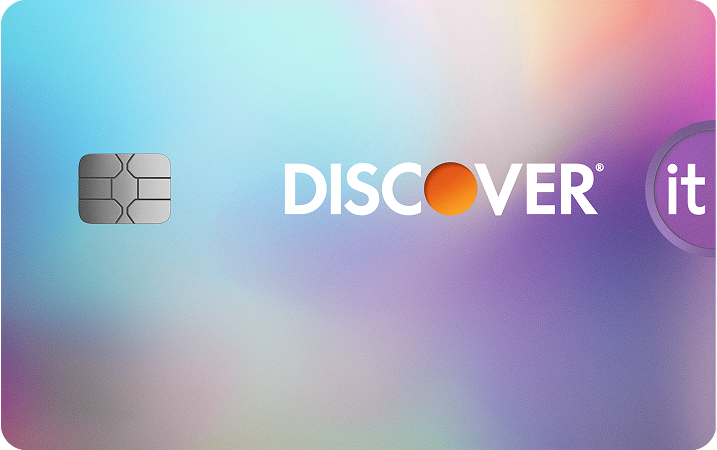
Discover it Student Cash Back
Best overall5% cash back on rotating categories like grocery, gas, restaurants, and Amazon, capped at $1,500 per quarter. 1% on everything else. First-year Cashback Match doubles all cash back you earn. Discover reports to all three bureaus and reviews accounts for graduation regularly.
Best for: Students who can pay attention to quarterly category activations and want the most rewards.
Capital One SavorOne Student
Best for diningUnlimited 3% cash back on dining out, entertainment, popular streaming services, and grocery stores. 1% on everything else. No foreign transaction fee, which is rare in the student segment. Reports to all three bureaus.
Best for: Students who eat out, stream constantly, and want strong rates without rotating categories.
Chase Freedom Rise (Student-Friendly)
Best for thin fileChase markets Freedom Rise to first-time credit users including students. Flat 1.5% cash back on every purchase with no rotating categories. Pre-approval pathway through Chase checking accounts makes this one of the most accessible cards for applicants with no credit history.
Best for: Chase customers and students who want simple flat-rate rewards from day one.
Bank of America Travel Rewards Student
Best for travelEarn unlimited 1.5x points on all purchases. Points redeem at 1 cent each as a statement credit against any travel or dining purchase. No foreign transaction fee makes this an easy pick for study-abroad semesters.
Best for: Students studying abroad or who travel frequently and want a no-fuss travel card.
Citi Rewards+ Student
Best for small spendEarn 2x ThankYou points at supermarkets and gas stations on the first $6,000 each year. 1x on everything else, then every purchase rounds up to the nearest 10 points. A $3 coffee earns 10 points, not 3. Punches above its weight on small daily spend.
Best for: Students with lots of small daily transactions who want the round-up to do the heavy lifting.
A student card has one job: build clean credit.
Three filters separate cards built for students from cards that exploit thin-file applicants.
We model student spending, not adult spending
We tested every pick against a $9,000 annual student spending mix: 30% groceries and dining, 20% gas and rideshare, 15% streaming and digital, 15% travel home, 10% supplies, 10% miscellaneous. The picks above all generate at least $150 in net rewards in year one before the signup bonus.
We weight approval odds for thin-file applicants
A great card you cannot get is useless. We checked approval data shared by issuer reps and aggregated reports from r/CreditCards. Cards that frequently approve students with no credit history rank higher. Discover, Capital One, and Chase Freedom Rise are the most consistent approvals.
We weight graduation paths
Some student cards convert to a flagship card automatically when you graduate, preserving the account history and unlocking better rewards. Others require a separate application. The Consumer Financial Protection Bureau notes that account age makes up a meaningful share of the FICO score, so graduation in place is a real advantage.
From thin file to 720 in under two years.
The simple sequence that turns a student card into a strong score.
Apply during the school year, not summer break
Issuers want to see a current school enrollment. Approval rates rise modestly during the academic year, and you have a full 9 months of activity before summer to build payment history. Students who applied in September typically saw faster graduation timelines than those who waited.
Charge two recurring bills, then auto-pay in full
Set the card to handle one streaming subscription and one phone bill, then enable auto-pay for the full statement balance. This guarantees on-time payments without you thinking about it. Payment history is 35% of your FICO score; this single habit is the single most important thing you can do.
Keep utilization under 10% on the statement closing date
Issuers report your balance to the bureaus on the statement closing date. If your limit is $500, keep the reported balance under $50 by paying mid-cycle if needed. Lower utilization means a higher score, full stop.
Wait until graduation to add a second card
Adding a second card during college rarely helps and often hurts: the new inquiry drops your score, and the new tradeline drags your average account age down. Wait until you have steady post-graduation income, then add a flat-rate cash-back card or a travel card.
Three pitfalls that quietly tank student credit.
Carrying a balance to "build credit"
You do not need to carry a balance to build credit. The bureaus see your statement balance and your payment, not whether you carried debt. Pay in full every month and you build credit just as fast, without paying 23% APR for the privilege.
Missing one payment
A single 30-day late payment can drop a thin-file score by 60 to 100 points and stays on your credit report for 7 years. Auto-pay the full statement balance from a checking account that has the cash to cover it. Make this the first thing you set up.
Closing the card after graduation
Closing your oldest credit account drops your average account age and removes a tradeline from your file. Most student cards convert to a no-fee adult card automatically. Keep it open with a small recurring charge, even if you barely use it.
Build credit, then graduate the card too.
Common questions about student cards.
Can I get a credit card as a student with no credit history?
Yes. Student credit cards are designed for applicants with no prior credit. Issuers like Discover, Capital One, Chase, and Bank of America underwrite student applications using income, school enrollment, and basic identity verification rather than a credit score. The CARD Act of 2009 requires applicants under 21 to either show independent income or have a co-signer, so be ready to document part-time job earnings or financial aid.
Do I need a job to qualify for a student card?
Yes, generally. Federal law requires applicants under 21 to demonstrate independent ability to pay. Acceptable income includes part-time work, regular allowances, scholarships designated for living expenses, and stipends. Issuers do not usually verify the income figure for amounts under $10,000 a year, but you must report it honestly.
Will using a student card affect my financial aid?
No. Credit card balances are not assets reported on the FAFSA, and credit card rewards are not income for federal aid purposes. The IRS treats card rewards as a rebate, not income. Carrying a balance does not affect your aid eligibility either, though the interest will eat into any benefit the rewards provide.
What credit score will I have after one year?
If you make every payment on time and keep utilization under 30%, expect a starting FICO score in the 680 to 720 range after 12 to 18 months. The Consumer Financial Protection Bureau notes that payment history and credit utilization are the two largest scoring factors for new accounts. The path is simple: pay in full, every month, on time.
Should I keep the student card after graduation?
Yes. Most student cards either upgrade automatically to the issuer's standard card (Discover it converts to Discover it Cash Back, for example) or stay open as no-fee accounts you can keep forever. Keeping your oldest credit card open helps your average account age, which is roughly 15% of your FICO score.
Are co-signed cards still available?
Most major issuers stopped offering co-signed credit cards after the 2009 CARD Act, but parents can add a child as an authorized user. The account appears on the child's credit report at most issuers (Chase, Amex, Capital One), helping build credit history quickly. The primary holder remains fully liable for charges, so trust matters.
See the score you can hit by graduation day.
Plug in your starting point. We will model the path.